Time to Forgive Yourself // Dealing with Guilt

By Brendan Slovacek

If God forgives me, why do I still feel this way? This question that I was asked through the tears of a young woman perfectly encapsulated one of our strongest negative emotions: Guilt is a punishment we give to ourselves, even after God has forgiven us.

Each person has been given a built-in meter of “Right or Wrong” known as our conscience. God didn’t give us free will without giving us a way to know what’s good! Our conscience is there to balance out our desires, inform our will, and help us follow the natural laws that are written on our hearts. But what about when we don’t choose what’s good?

Guilt is a pain inflicted by yourself, to yourself, and a lot of times to another person. I learned this the hard way after I met a woman who I fell into a deep romance with. However, it was a long distance situation and (to be blunt) I felt insecure in her ability to love me from afar. I didn’t see myself as worthy of her love. So even amidst all of my affection for her, I started to see someone else who was a “safe option” because there wasn’t a distance. When she told me “You hurt me,” it was like a knife had been stabbed into my heart, except I was the one holding the knife. It took almost a year before I was able to come to terms that I hurt someone I loved. Even though I reconciled with God, I still felt the weight of my guilt burying me every day. But I realized that if I truly wanted to be a better man, I couldn’t let guilt control me. I had to take control of my guilt and shame and let my future actions speak louder. I learned it was time to actually forgive myself.

I don’t believe bad people exist; just good people who make bad choices, and sometimes a lot of them. Sometimes our bad choices are momentary without thinking; sometimes they have been planned out and are intentional. Regardless of the circumstances, we still bear the pain of having fallen. Yet Jesus showed us there is redemption for each person, if we so choose it. But if you keep embracing your past mistakes, your hands will be too full to let Jesus take you into his arms. It doesn’t matter what your mistakes are. Maybe you slept with someone. Maybe you cheated. Maybe you said something hurtful to a close friend. Maybe you got too drunk. Maybe it was an accident. No matter what you did, it’s time to forgive yourself.

There’s no perfect solution to overcoming your guilt, but in my struggle to become a better man in the face of my past mistakes, these things have helped immensely: 

1. Admit your guilt to yourself and to God.

The first step is admitting you have a problem. It can be hard to recognize this, especially if you feel you got something out of whatever bad choice you made. But eventually, you have to see the reason why what you did was wrong and admit it to yourself to God in the Sacrament of Reconciliation.

2. Remember your bad choices don’t define you.

Your guilt is actually proof that there’s good inside of you! You wouldn’t be able to feel guilt if you were evil. Since God made us with a conscience, that means we need to know what good is in our own hearts in order to make choices! This goodness comes from being children of God, created in His own Image and Likeness. At times, we fail to be like God, but He still made us with the capacity to be like him. Thus, who you are is about God’s choices, not your own, and He chose to make you with goodness!

3. Even if someone can’t see past your bad choices, God can (and so can you).

Sometimes, the other person won’t forgive you – and that’s okay. You may have been the cause of their pain, but it doesn’t mean you will always be able to heal them. Sometimes, they need to heal on their own. However, don’t think for a moment that just because you couldn’t fix what you broke, God can’t fix you. God wants to forgive you, and you need to forgive yourself too. Likewise, if you feel ready to forgive someone for hurting you, don’t make them wait. Sometimes, the closure of your forgiveness can help them heal from their guilt too.

4. Reconciliation doesn’t always look the same for everyone. 

It’s okay to heal in different ways. Don’t let others try to dictate to you what needs to happen for you to reconcile with God, others, or yourself. However, no matter how your journey goes, always remember to ask yourself, “Is this really helping me to grow as a child of God?” If the answer is no, it’s not a healthy method of trying to heal.

5. Remember all the good qualities about you, and make a list toward the good qualities you want to grow in.

If you want to truly move past your guilt, then it’s important to remember all the things you should be proud of. Then, in the areas where you have shortcomings, set goals of what you want to work on and make action steps to make it happen!

Finally, know that I’m praying for you. Whatever brought you to this article, burdens of the past can be heavy, but with God, you can lift them off and rise higher than ever. Jesus, Victor over Sin and Death, pray for us!
Transformed Through Suffering

By Savannah Pawley

Christ is present with us in each moment of our lives, but so often we only turn to Him during our times of suffering and despair. Within this past year, I have faced some of the biggest struggles of my life and felt as if I was stripped of everything except my relationship with the Lord. In that, I came to realize how little I relied on God until I was in the midst of great suffering.


I first want to preface this by mentioning that everyone suffers as a consequence of mortal sin and being part of a broken world. Each and every individual suffers but it may look different for each of us. Regardless of whether you feel that your suffering is insignificant or that other people have worse situations than you do, your hurts and feelings are still entirely valid, and Lord sees and knows them. For me personally, it wasn’t until I was faced with suffering that I was able to see where Christ was with me in my sorrow.

For most of my life I struggled to comprehend how Christ could possibly relate to my life. I wasn’t able to see the ways His earthly life was similar to mine in any way. But a few months ago as I was reading scripture. I began to reflect on the simple verse, “Jesus wept,” in John 11:35. What I find to be most moving about this scripture is how Jesus still weeps for the loss of someone He loves, even though He knows He will soon resurrect Lazarus from the dead. He weeps out of pity and sorrow for those mourning the loss of someone they loved dearly. Jesus’s heart is moved with pity for each one of us. He does not look at our suffering and tell us to move on, but rather, He sits with us and weeps. And so much like the reading in John, after He weeps, He raises us from the dead. He makes us new and gives us more than what we had lost previously.

In C.S. Lewis’ book, A Grief Observed, he mentions how Christ allows suffering because it wrecks our “house of cards.” Suffering causes our priorities to shift and forces us to examine our lives and see what is preventing us from being rooted in Christ. The Lord does not cause suffering, but He allows it to happen in order to guide us unto a deeper union with Him and a conversion within our own lives.

About six months ago, I remember sitting in the chapel asking the Lord why he would allow me to suffer so greatly, and He reminded me of how there cannot be a resurrection without the crucifixion. The Lord cannot make us new if we do not allow ourselves to suffer. Even more importantly, Christ cannot transform us if we do not allow Him into our suffering. Knowing that there is a resurrection after the crucifixion allows for each of us to endure our suffering with the hope that the Lord will bring beauty and newness out of it.

Finally, we must also root ourselves daily in Christ and recognize how we always need Him, even in times of abundant successes and blessings. If we humbly remain steadfast in our reliance on Him, then it will truly strengthen our fortitude and our capacities to remain faithful to Him through times of great suffering. May we exude the same radical trust that led Job to cry out, “The LORD has given and the LORD has taken away. Blessed be the name of the LORD,” in Job 1:21, no matter the circumstances.

So we do not lose heart. Though our outer nature is wasting away, our inner nature is being renewed every day. For this slight momentary affliction is preparing for us an eternal weight of glory beyond all comparison.

2 Corinthians 4:17

Women Who Struggle With Purity: You Are Not Alone

By Katie Collin

In a world that oftentimes promotes sexual promiscuity, it can feel especially lonely and isolating for Catholic women who struggle to live out the virtue of purity. It comes as no surprise that the devil distorts our desires when we try to live out that virtue. My struggle began in middle school with pornography and masturbation, and later involved wrestling with intrusive lustful thoughts and a difficulty viewing others chastely. Whether you are tempted by this or any other sexual sin, you’re not alone. I don’t know your story exactly, but I share in common the loneliness and shame that many women feel when tempted by sins of impurity.

I was exposed to pornography in middle school and sadly my curiosity led me down a rabbit hole. I felt trapped and didn’t tell anyone for five years. I attended Catholic High School, went to church weekly, and enjoyed participating in youth group and many retreats. But I felt so alone, like I was the only one fighting these demons. While at retreats, men’s talks were full of practical resources on how to combat temptations of impurity but women’s talks didn’t address it, making me feel even more helpless. Eventually, I decided to watch some of the men’s talks on YouTube. I felt so alone in my addiction. What made things worse is what people would say about women who struggled with impurity- that they are “disgusting” and “gross.”

I want to pause right here and say that you are not disgusting, and you are not gross— any voice that tells you otherwise is from the Enemy. You are a beautiful, beloved daughter of God. You were worth dying for. If the God who created the universe says this, why should you believe anything else?

Ironically, it wasn’t until I told someone about my struggle with impurity that I truly started to experience freedom. This was the most vulnerable I had ever been. In the fetal position and bawling, I told my friend of my struggles with purity. She looked at me with such love and acceptance- the way I envision Christ looks at us when we come to him. Then she just sat by me. I’m convinced her presence was God being present to me through her. She encouraged me to open up more about my struggles, and I did.

It wasn’t easy but I began to give my witness to others, I went to confession often, I asked people for prayers and advice, and I started to combat my sin with prayer. It was not easy. Shame had its hold on me for years. However, it is truly by the grace of God that I was able to fight this fight. The devil wants us to internalize our struggles, so I did the opposite. I began sharing my experience with people in hopes that they would help me, and as a result, God worked through these friends, and it became easier. I am forever thankful for these people’s prayers.

Was I perfect in my fight? No. But I didn’t stop and I am much closer to freedom, and I now can better control my temptations. Jesus wants us free, that’s why he redeemed us by the cross. Don’t lose sight of that.

Today, I am no longer trapped by sins of impurity. Although, temptations hasn’t totally disappeared, and Satan will occasionally try to tempt me, the devil has no power if we don’t give it to him. When I feel spiritually attacked, I immediately turn to Mary, Our Mother. I reach out to a support group I lead for women who struggle with purity. It is comforting knowing there are other women carrying this cross and knowing that I am not alone.

You are not alone in this fight either.

I encourage you if you struggle with impurity to tell someone you trust. Laying out your sinfulness to others can be one of the hardest things to do, but from that you will start to experience the freedom only God can give. He wants you to bring this into the light. Telling someone you trust provides accountability and prayerful support when you need it. It can be difficult to find resources just for women, but keep looking, even if you wind up utilizing information intended for men. You can cater them to yourself, which is okay. I have listed some resources below. In the end, your efforts will pay off. You can do this! Put your armor on and keep fighting the good fight. I will be praying for you.

Prayer is a Relationship, Not a Wishlist

By Sydney Lorentz

“Our Father who art in heaven…”


“Hail Mary, full of grace…”


“Glory be to the Father…”


If you’re like me, you could rattle off these words at the drop of a hat. We’re taught these prayers from our childhood, and the importance of prayer is continually drilled into us. We’re taught that prayer is a conversation, essential to developing a relationship with God, a person. However, we can often discover a disconnect when trying to draw the parallel between these memorized lines and a real, authentic conversation. Because of this, when many of us who are seeking to know God better try to develop a life of prayer, we’re often left in the dark as to where to begin.


St. Alphonsus Ligouri once said, “Acquire the habit of speaking to God as if you were alone with him, familiarly and with confidence and love, as to the dearest and most loving of friends.”

Although I am far from being an expert on developing a daily prayer life, here are three of the biggest lessons I have learned when it comes to talking daily with God:

1) If prayer doesn’t come first, it doesn’t come at all.


One of my favorite professors once told me, “The only mistake you can make in prayer is to stop praying.” I’ll be quite honest with you— this is something I have been far from perfect at remembering. Just as in any important relationship, our relationship with Christ requires commitment and investment. If we desire to grow in relationship with someone, we will make it a priority to spend time with them. One married couple I have come to know well has told me that they make it a priority to set aside time every week to spend together. In the same way, we must always set aside designated time to pray each day. Every single person prays better at different times every day. I personally like to start my day in prayer. It really centers and focuses my day. However, you have to decide what time of day works best for you to pray. When you find that time, stick to it and don’t compromise.


2) Prayer looks different for everyone.


One of the most beautiful things about prayer is that there is no “one” way to pray! One part I love about being Catholic is the treasury of devotions and traditions of prayer that the Church has to offer. Personally, one of my favorite ways to pray is through Scripture, especially through the Church’s tradition of lectio divina, which involves praying with the words of the Bible and applying them to one’s life. However, one of the worst traps to fall into is the lie that one person’s prayer life may be better than the prayer life of another. Since every individual’s relationship with God is unique, every person’s prayer life is going to look different. While I know I pray well through Scripture or spiritual reading, another friend of mine prays well by saying the Rosary every day. You just have to find the method of prayer that is best for you in order to help you connect to God.


3) Prayer looks different in every season.


Over this past summer, I served as a summer missionary in the Rocky Mountains of Colorado. During this time, we were given thirty minutes of protected prayer time every day in front of the Blessed Sacrament, as well as attending Daily Mass. This was a tremendous blessing that really solidified the value of daily prayer in my own life. Going into the following semester, I was excited to continue this outside of camp. However, I soon discovered that it proved difficult to maintain this same level of commitment with an intense academic load, as well as with the responsibilities of being a college athlete. While you should never do away with your commitment to prayer, prayer often will, and should, look different in every season. For example, many times my prayer this past semester looked like ten minutes of praying with Scripture with my coffee in the morning, or praying a rosary on the way to a cross country meet with my teammates. It’s important to not become frustrated when prayer may look different from another period of your life, but to adjust that commitment to the season you’re in.

In conclusion, prayer is an indispensable part of the Christian life. Jesus wants to be in relationship with you, so I encourage to get to know him through meeting him daily prayer.

Pursuing God In The New Year

By Anna Mahoney

Every year, my family gets together with our extended relatives and friends for a New Year’s Eve party. One tradition at the party is creating vision boards for the coming year— we each take old magazines and cut out the pictures and words that best represent our vision of what we want to do, who we want to be, what we want to accomplish, and so on.

Last year was unique because this activity just involved my immediate family. We all sat down at our table with a piece of white copy paper, a pencil, some pens and one magazine. All the past years, I would scour through dozens of magazines, picking words and pictures that caught my eye, then ripping them out, pasting them together, until voila—my vision board was complete! Last year, however, our only magazine was a fishing magazine, and although I love fishing, the lack of magazine variety required me to reflect on the various areas of my life before springing into action.

I took a cup, placed it in the center of my page and traced a circle around it with my pencil. I stared at that circle for quite a while, as I went through all the endless possibilities to focus on that year…

Family?
Relationships?
Self-growth?
School?
Career?
Travel?
Faith?

I came to realize that prayer life was much farther down on my list of priorities than I’d expect. Automatically I thought, “Well shoot, I’m a bad Catholic.” As reluctant as I was to admit it, I’d fallen away from God. And until that moment, I hadn’t even realized it…

I knew it wasn’t enough to simply write God, my Catholic faith, and my prayer life in the center of the circle. I had to take action.

I got my calendar out and began to map out my days, scheduling in time for confession, Mass, and prayer. I asked my friend who had the same goals in mind if they would like to be my accountability partner (as I knew I wouldn’t initially have the discipline to make this a habit).

One lesson I’d learned the previous summer, during my internship with Southwestern Advantage, is that nothing in this life is ever owned— it is rented, and the rent is due every day. For example, your health or fitness is never owned; it is rented and the rent is due every day. A great marriage is never owned; it is rented and the rent is due every day. Likewise, a strong faith is never owned; it is rented and the rent is due every day.

Acknowledge where you are. Define where you want to be. Create a plan. Pay the rent.

A vision board isn’t meant to stay a vision. A vision board is a plan. All you have to do is take action and remember that with God, all things are possible.

Hearing the Healer

Late in January of my freshman year at Franciscan University, I was attending the women’s 2016 Beloved Conference, when I was confronted with a truth that was very troubling to me—how little I personally knew God. He seemed out of reach and far away, despite how much more I knew about him than I had a few months back. Where was the awe the others around me seemed to exude? As sensitive as I was (and still am), I felt quite numb about anything having to do with my faith. However, as I was very soon to discover, God, as He is so prone to, was using this numbness to reach me. 

Perhaps you identify with where I was at the time— just going through the motions of attending Church every Sunday, praying for those in your life who are suffering, sharing what you believe when asked, trying to gain merits by “living the life of a good person”, depending on accolades and others’ praise to validate that you are a good person, while feeling guilty that you feel nothing other than guilt through it all— why is your sense of wonder missing? After all, you are doing everything commanded of you.

After climbing up flights of stairs to “catch up” with the devout people in your life, you are dismayed when you see the radiant light in their eyes. It’s as if they are gazing at a view from the summit of a mountain, yet as you kneel with them, all you can see is a cross, or words on a page, or a piece of bread. Yes, you know the significance of what you are gazing upon, but you wish you could consider it with the zeal that they seem to possess. What is holding you back?

Those five years ago, I was troubled much of the same concerns mentioned above. But God was soon to show me what my hindrances were. These involved the way I spent my time. What I celebrated in life. More than anything however, they were found in how I was treating my wounds.

Sure, we live in a world that despises weakness. We hear so often that flaws should not be seen. Pain should not be felt. We fight these things as much as possible, for our own benefit and for the sake of everyone else. No human person wants to cope with or see how we are hurting, so why would God?

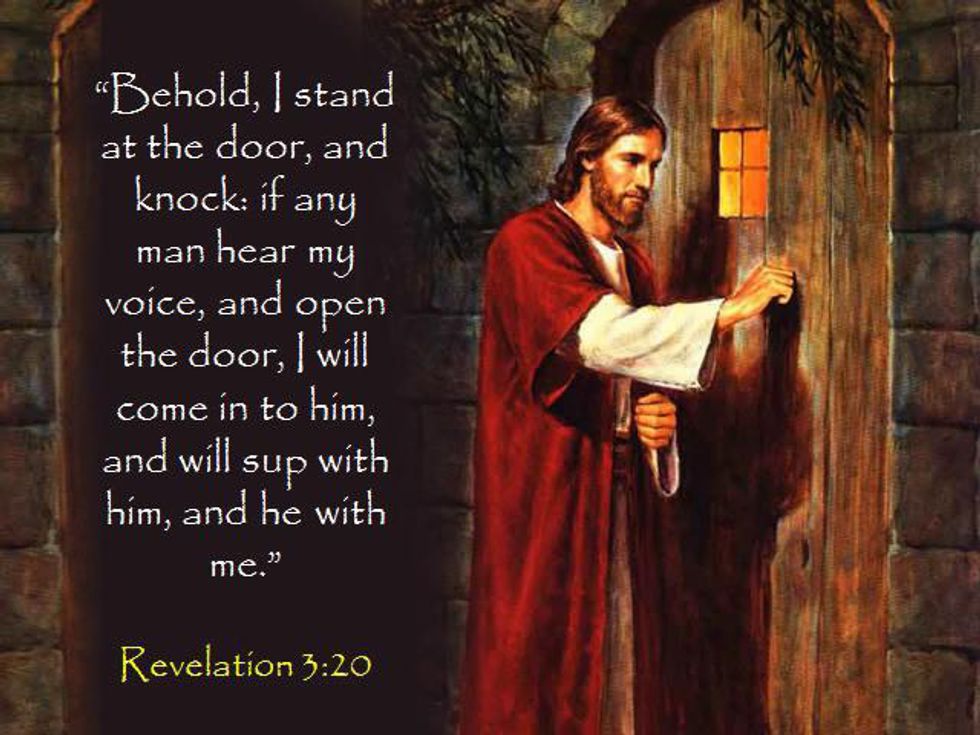
And yet, no matter where we are, He calls out to each of us in Revelations 3:20, saying:

The truth is that even while He feels out of reach and far away, He continues to knock on the door to your heart. He has still been seeking you, speaking to you, but perhaps the world has become too loud for Him to be heard. Yet, these hurts, this emptiness, are communicating the words to which you have become deaf.

As P!nk says in “Glitter In The Air”, “Have you ever invited a stranger to come inside?”

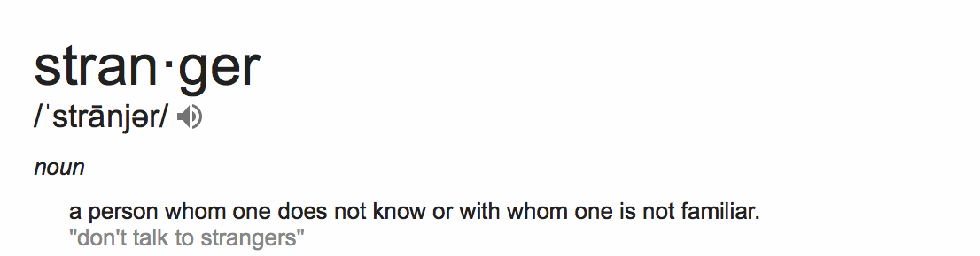
What is interesting to me is the definition of stranger:

I always assumed that “stranger” always automatically meant that the unfamiliarity was mutual between both persons. However, its true meaning only emphasizes the idea that while God may feel like a stranger to you, He still knows you. Perhaps you feel like you merely are to God what some star-struck fan is to his or her favorite celebrity—no more than a part of a large crowd of unnamed supporters pleading for Him to notice you. Well, He has noticed you. In fact, He has witnessed every part of you—every fear, every hope, every thought, every worry, every flaw, every doubt, every wound— gazing upon you with a love no deed could augment or undermine.

He continues to wait at the door, hoping that you will let Him in, so He can finally share this love with you. However, the choice is entirely up to you. He cannot enter unless you willingly open up, for this is a door that only has a handle from the inside. 

About six months later during my time at Franciscan, I noticed a definitive characteristic shared between every single one of the people that Jesus healed— they were not selectively chosen to be healed, but rather they all sought Him. They were all healed because they asked Him for healing, thus taking the first step of letting Him in. 

Closeness to God correlates with the extent that He is welcomed throughout each moment of your life. It correlates with the extent that you accept the love He offers you, especially when you feel most unlovable. He wants to be the one to console you when you are feeling your most lonely, your most empty, your most broken. So it is important to consider: where are you in those moments? How do you soothe the pain?

That night, following the 2016 Beloved Conference, I was well aware that the way I spent my time reflected how disordered my priorities were. After a long day of classes, I would goof off and do whatever I wanted first, and then I would cram with my studies with whatever time I had left. I was reminded of this issue when I was talking to my roommate about how I was feeling troubled about God’s seeming distance, and she called me out:

“Why don’t you spend some of all that time you watch YouTube videos praying instead?” 

That is when it became clear, I was allowing no time in my schedule for prayer. And I responded with, “You know, Mary, you’re right,” as she reached for a book on her shelf. 

Then she handed this tiny book called My Daily Bread to me, and said, “This is a book from my parents. They always told me that whatever page you flip to is God’s personal message for you. I think this would be a good time for you to try that.”

So without much thought, I opened the book to a random page, and to my astonishment, it said:

The grace of devotion is not just a holy feeling, nor is it a religious mood… If I make a firm and persevering effort to abandon my foolish love for unnecessary distractions… I will have a steady loyalty to Christ, and I will no longer depend on feelings and moods, but will follow God’s Will intelligently and faithfully even when I do not feel like doing so.

My Daily Bread, Book Two, Chapter 13

I nearly fell over. What relevance! 

Then over the course of the next week, I began to reflect on my “unnecessary distractions.” And I began to notice how I was feeling at those moments when I was tempted to waste my time… Hurt. Bored. Confused. Insecure. Alone. My habitual response to unpleasant feelings had become to distract myself from them. To find an escape. So as a coping mechanism, I would binge watch YouTube or start brainstorming ways to prove myself to the people in my life. Temporarily, it would work. I would forget the hurts for a while. Yet, I still held onto them.

Meanwhile, my relationship with God was not progressing because I was not letting Him in to heal me. 

Are you doing the same thing? That could be why God feels so far away. The more you indulge in the distractions of this world, the more you weaken your relationship with God and your ability to see and hear him. It is not a matter of Him ignoring you until you live life His way. Rather, I have found that He has always been talking to me, but until I made an effort to focus solely on Him and limit the distractions that interfere, I was deaf to His voice. 

So do not be afraid of Him! Do as is said in Scripture: 

Be anxious for nothing, but in everything by prayer and supplication with thanksgiving let your requests be made known to God.

Philippians 4:6

Come to Me, all who are weary and heavy-laden, and I will give you rest.

Matthew 11:28

Cast all your anxiety on Him because He cares for you.

1 Peter 5:7

Spend some of your time every day talking with Him, in the understanding that you are embraced just as you are right where you are, and you will begin to know Him. Ask Him to help you see the circumstances of each day as He does, and you will be amazed about all of the ways He is working in your life! You will begin to, too, have that radiant light you see in others’ eyes as they gaze upon Him in faith.

How to Start a Relationship with Jesus

By Ellie Pierre

July 3rd of 2019, Catholic Youth Summer Camp: I walked into a room filled with worship music, and before me stood Jesus in the monstrance. This was very new to me given that I’d never had an encounter with Him. I’d heard about Him, and I didn’t really think I needed Him. But I knew I wasn’t happy where I was at, and something needed to change. So I knelt down and held out my hands. I started to let the words of the song take meaning in my heart, and as I did, tears came—tears of repentance, tears because I wanted to change, tears because Jesus was real, tears because Jesus’ love for me was stronger than I could ever comprehend. I felt so close to Him at that moment, so loved, known, and held.

Let me say before all this took place, I was in a bad place. Long story short, I would make bad decisions that felt good at the moment, but once that moment wore off, I was left feeling more empty, lonely, and hopeless. I felt a longing in my heart for something more that I tried to cover up with things of this world. This longing was left unsatisfied until I started a relationship with Christ.

We can all have an encounter with God. But it is up to us whether or not we are going to let it change us. To have a relationship with someone is not just a one-time thing: it takes time, effort, and persistence. An encounter is only the start, just like meeting a person for the first time. If you want to start a relationship with a person, you have to take the time to get to know them. Here are things that have helped build my relationship with Christ:

Prayer

Prayer is turning the heart toward God. When a person prays, he enters into a living relationship with God.

CCC 2558-2565

You can’t get to know a person until you talk with them. Take time every day to talk with Him, being open to Him and everything He has to offer. It’s all free for us to receive. It’s just our choice whether or not to take that step to come to Him to receive it. He is here right now, patiently waiting for you to turn to Him so that He can shower you with His gifts and flood you with His grace.

The Bible

Above all, the Gospels sustain me during my hours of prayer; in them, I find everything that my poor little soul needs.

St. Therese of Lisieux

By reflecting on the Gospels, we understand how Jesus lived and how we are called to live and treat others as He did—not just by reading the words, but by praying them. This is called Lectio Divina. It involves reading attentively, reflecting on what phrases speak to your heart, resting in the silence of His loving embrace, and responding to what He is calling you to do.

The Blessed Virgin Mary

To love Mary is not to take love away from Jesus. It is to multiply, amplify, and grow in love with Jesus.

Fr. Mike Schmitz

If you are looking to build a relationship with Christ, Mary is the one to turn to for help. She was given to us to be our Mother and will point you right to her Son. Much like how the moon reflects the light of the sun, Mary reflects the love of her Son. Pray the Rosary, and meditate on the mysteries of Christ.

Eucharistic Adoration

The soul hungers for God and nothing but God can satiate it. Therefore He came to dwell on earth and assumed a Body in order that this Body might become the Food of our souls.

St. John Vianney

Eucharistic adoration will bring you into an intimate relationship with Jesus. You can come to experience this intimacy just by sitting in His presence, truly believing in your own heart that before you stands your Savior, the One who bled and died for you, the One who knows you more than you know yourself, the One who has a love for you that is greater than anything you have ever experienced before. Just resting with Him in the silence of your heart will allow intimacy with Christ to flourish. Take the time to listen to what He is speaking to your heart.

I pray this helps you to start a relationship with Jesus—to experience a love, peace, joy, and freedom that exceeds everything this world has to offer. There is a hole in everyone’s heart that only God can fill. He created us to be in a relationship with Him, so why would we want to do anything other than what He created us for?

Loving God with the Heart of a Child

By Theresa Moore

Do you ever miss the simplicity of being a child? Those carefree, candy-licking, nap-taking, running barefoot in the backyard kinds of days? Most people have reminisced over these moments at one point or another. What is it about these moments that keeps drawing us back? I believe the part of those memories that is so attractive to us is the simplicity of them. And if we could remain this simple as we grew older, our love for Christ would increase remarkably.

Read more